Musings of a Wandering Heart

Monday, February 01, 2021

Birds and Feeders

 It was peak summer. Mid-May in Marathwada. I was moving around villages in the interior on a reporting assignment. Even when the earlier year it had rained well and fortunately that year was not declared as drought year, the landscape at the climax of summer was bleak, awaiting rains.

Brown earth till the horizon, some tilled, some fallow. Small clusters in between. Several farmers were getting their wells deepened or dug new.


It was well past noon time, and we came down a slope to an undulating area to meet a farmer. The farmer and his two friends, all 50-plus, were sitting in front of his spartan thatched hut. The sun was on the other side, there was lots of shade there. We sat on the charpoy while the farmers all preferred to sit on the ground that was smoothened with cow-dung.

Not even five minutes into our chatter, a continuous chirping of birds distracted me. I looked around and within few feet found the source of my delight. A jugaad that can be called as bird feeder was handing at a low level and was filled with grains. A little distance away, was broken half of an earthen pot that acted as a water container for the birds.


I am not a birder so I could not recognize birds except Bulbuls. But the fact that there were so many birds even during peak sun time made me happy from the core of my heart.


I asked around and came to know that he had made this arrangement almost three years ago when it was a bad drought year and humans were suffering from shortage of water. He then realized the agony of his winged friends. Immediately he fed them, and the arrangement continues. Bird feeder indeed!!

Monday, January 25, 2021

Tale of Two Bridges

Can one spend his or her entire life at the same place or at the max, visit the next village? Hard to image, but this is true for most tribal belts.


Near the far eastern point of India’s border with Tibet (China), Kaho is the last village and before that is a place called Meshai, also spelt as Mosai. From Tezu, the headquarter of Lohit district – out of which was carved out in 2006 the Anjaw district that is home to Kaho and Mosai – these two places are almost 230 kms away, a good whole day drive in a sturdy vehicle plus few hours more in optimal weather conditions on the road snaking through the layers and layers of Himalayan folds.


The road from Tezu till Walong and Kibithoo runs parallel to the river on its right bank. Kaho and Mosai are on the left bank. Till 2009, the two villages were connected with Kibithoo and, hence, rest of India, only through a steel-and-bamboo hanging bridge on the mighty Lohit river.

Crossing this bridge is a task in itself. Cutting across a deep gorge, the Lohit river literally roars below with ferocity. Almost any time of the day, there is a strong wind gushing through the gorge making the bridge swing like mad.


In 2009, the Indian Army built a suspension bridge, bringing much needed relief. Suddenly, reaching Tezu was easy. One was able to carry as much luggage as one wanted. Medical aid in times of emergency was possible. Children’s vaccination would happen on time.

Unfortunately, this bridge was washed away in Lohit’s perilous floods in 2012. For quite many years, people were back to the hanging bridge again. And now, thankfully, there is another suspension bridge little downstream and things are looking bright again.

Sunday, January 17, 2021

Are you into tree-spotting?

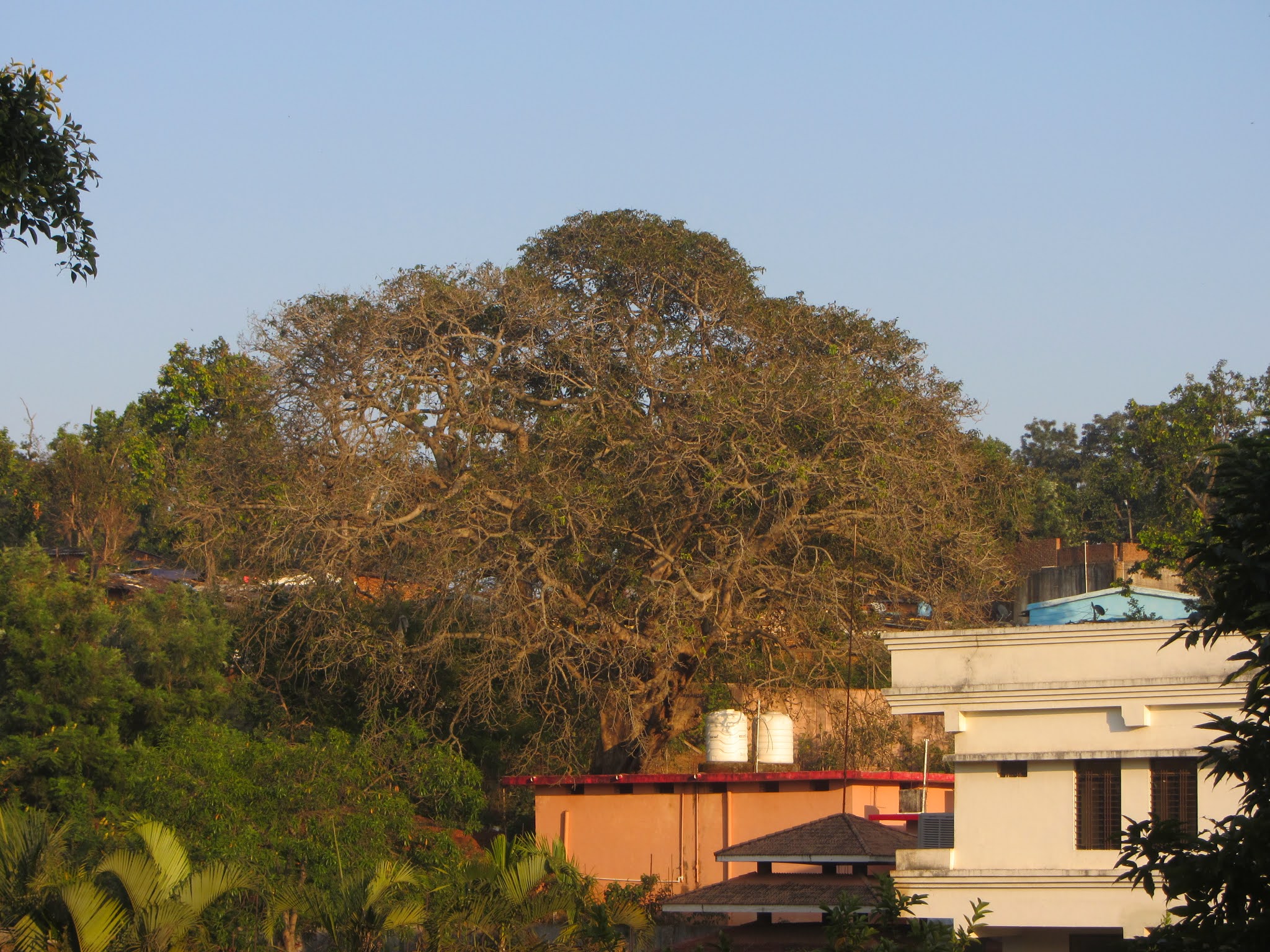
First I noticed the huge canopy from far away. Then as our car came nearer, the actual size dawned upon us and we had to literally turn up our head by more than 90 degrees to catch the full glimpse of the beautiful ficus. Tree spotting has been my favourite activity on field trips and this was no exception.


Across rural areas in peninsular India and also in the Indo-Gangetic plains, one can easily spot huge banyan trees or peepal trees (ficus religiosa), two of the most common ficuses in India. Perhaps our ancestors knew the biological importance of this family of plants as the ficus trees are vital components of tropical ecology. Experts tell us how these trees are “particularly attractive to seed dispersers in that they produce large and nutritionally rewarding fruit crops.”


Every field trip for reporting I see a minimum two-three such trees with huge canopies, may be banyan or peepul or sometimes pilkhan. If the tree is within the limits of that village, it is inevitably the centre of attraction for all and sundry. There ought to be a pucca circular platform surrounding the tree trunk comprising at least four-five large trunks so intertwined to yield a massive single trunk.


These massive trees are slowly going missing from the urban settings. Hundreds and thousands of them are culled for road expansion or other such infrastructure projects. But fortunately, in rural areas, we still spot them, unless, of course, if they don’t fall in the land acquired for any road or other infra project. Awareness is the key.
 

The question is: Do you notice these trees when you travel? Be it from the comfort of your airconditioned cars or be it a public transport vehicle such as bus or even a train.


Sunday, January 10, 2021

Idyllic Sakoli that once was

Sakoli is 100 kms from Nagpur. In Bhandara district on the national highway that goes east towards Chhattisgarh, Sakoli has this unique landscape. From the highway that snakes right through it, an elongated hillock offers a wonderful backdrop. Surrounded by lakes all over, the place itself also has three lakes within its boundaries. One could count at least 20-odd lakes in the horizon from atop the hillock that offered a 360 degrees view.


Pink and orange of  Cotton Silk (Bombax Ceiba) lining the highway in spring, rugged browns in peak summer, paddy plantations’ greens in monsoon and mostly half empty yellow-grey farm plots interspersed with a variety of winter weeds and grasses. These are my prominent memories even when I left the place more than two decades ago.

The scenic setting has not changed much but what has is the proliferation of anthropogenic activities in and around Sakoli. To start with, population has increased, and in that, the number of pucca houses has increased exponentially. The commercial activity has increased. Sakoli has been a tehsil place for long but till about 2000s, it was a sleepy village that would witness almost empty streets after 7 pm. Things changed and how !!

During my recent trip, I found something that hurt me no end. Of the three lakes that I mentioned, one was ensconced between the hillock and a small, rocky outcrop. Hidden from the prying eyes, this lake was a serene place.


But the ‘development’ genie reached this quiet village too. Right next to this lake, right on its catchment, was built a resort with half a dozen cement-concrete buildings. Can never understand what prompts the authorities to give permissions for such activities and destroy the catchments of the lakes!!

Sunday, January 03, 2021

Amarkantak’s two pictures

On any visit to a serene place, be it in the hills or plains, one always returns with two or three ‘freeze frames’ images. It happens with me always. And a recent trip to Amarkantak was no exception. It is in eastern Madhya Pradesh, on its border with Chhattisgarh.  

I went to Amarkantak this winter after 14-15 years. The Amarkantak that I saw this time was a far cry from the tranquil Amarkantak I remember from my younger years and a relatively better spot in 2006.

The temple complex which has a kund is considered the udgam, origin, of the sacred river Narmada. Any time of the day, the tank brimming with water reflects the temple, a minimum 1000-year vintage, stone structure painted with lime and hence sparkling white.


The difference between the changes in the landscape, the increased pollution, decreased jungles etc. were a cause of concern. But what was more disturbing for me was the ‘encroachment’ by a massive currently under construction Jain temple on a hill. (A disclaimer: I have nothing against Jainism or the Jain temple per say, the problem I have is the towering temple creating widespread felling of jungle around its designated spot and adding to concretization.)

The Jain temple is situated high on the hill that is part of the catchment of the minor streams that feed the origin of the Narmada river and its first few kilometres. The temple, rising above the canopies of whatever trees are left on that hill on the northern side of the temple complex is visible from the hills on the southern side. 


The site, to a layperson, offers a beautiful vista from far. But this appeared as an attack on my mind, body and soul in love with Narmada!!

Wednesday, June 27, 2012

The monsoon patterns ...

Delhi is eagerly awaiting rains but in other parts of India, specially in the Sahyadri (Maharashtra's name for Western Ghats), the monsoon has already arrived. In the jungles of central India, in the Madhya Pradesh, the green movement has already started. And the entire nature has blossomed with joy at the bounty of raindrops.


A beautiful rain flower 


This photo reminds me of the best of times I spent in the western ghats specially during the rainy season.

A fern peeping from behind a rock


A common site at all hilly terrains in rains is the abundance of ferns. The small shapely leaves, almost following a neat pattern, and almost in a bunch. Possibly, the reason why they are attractive to a camera person too.


What a pattern on a rock ...
And if the plants and trees and shrubs are displaying the grandeur, how can the oldest form - the rocks be behind. Don't know why, but this kind of pattern, one can actually miss in stark summers or foggy winters. But washed clean, these are prominently visible in rains. Suspect this is some volcanic rock formation, or may be, some formation of immense geological importance.


And who can forget this small wonders. A berry, a mohua flower. All with their unique properties, contributing to the lively jungle ecology.


But before signing away, I must share a man-made pattern, which is an equally essential part of the monsoon treks in Sahyadris. Slurrrrpppp ... ...


Raw mangoes sprinkled with red chili powder

Sunday, April 15, 2012

Yamuna's two faces in Delhi

I feel bad for the 'disconnect' between the Yamuna and Delhi's aam janta more than anything. Delhi has been a capital city of several dynasties and Yamuna's river fronts at various times have played an important role.


However, when Britishers built the 'New Delhi' in the 20th century, they somehow "missed" the connection. So, today, it is only occasionally that common Delhiites reach the Yamuna banks (the real river bank and not the metro station of the same name). 


'Idyllic' at Ramghat, a small ghat upstream of Wazirabad water works.


Ram ghat again ... alive and full of cultural symbols


One of the drains bringing sewage into the Yamuna 24X7
And then, after Wazirabad, the river is dead. Immediately 50 metres downstream of the Wazirabad barrage joins in the first drain emptying sewage into the Yamuna. Official statistics show that Delhi has just only 2 % of the length of Yamuna but contributes to 90 % of its pollution. 


Recently, coinciding with Yamuna Jayanti (Yamuna's birthday) in the last week of March, a group of religio-environmentalist and also Yamuna devotees from Braj went all the way up to Hathni Kund, some 200 kms north of Delhi to find out how and where their beloved 'Yamunaraani' is lost. Braj area, 3,800-odd sq kms, is home to popular pilgrim places such as Vrindavan associated with Lord Krishna. IT attracts 40 lakh pilgrims annually.     


The filthy drain that Yamuna resembles just downstream of the Okhla barrage


The national capital that Delhi is, it has till date gotten away with such criminal pollution. Hundreds and thousands of crores of rupees have literally gone down the drain and even then, this is what all that remains in the name of the Yamuna. 

Sunday, October 16, 2011

Delhi's Yamuna ...

I am sure, someone is going to ask me what's the big deal about Delhi's Yamuna? Every one knows Yamuna more as a filthy drain and less as a river cutting across the length of the national capital.
But what many Delhiites are not aware of is the wonderful Yamuna stretch upstream of Wazirabad bridge. Take a look ...

  
Yes, this is Yamuna in Delhi


This wonderful river is very much the Yamuna in Delhi.


And this place is very much accessible.


But the unfortunate part is, neither many people know about this nor they make any effort to know. 


I recently went to these and many other places along the Yamuna bank. There were very bad stretches too. But here I want to showcase only the beautiful ones. And the group I was travelling with had wonderful encounters. More about all such adventures in the next blog post.


Saturday, October 01, 2011

My Goan Temple

Many people equate Goa with beaches and the foaming sea. But there's more to Goa that this. I can actually boast about it and say, yes, there is definitely more to Goa than the beaches and rave parties. Temples ... some dating back to more than 400 years old.

One such temple is the famous Shri Mahalasa Narayani temple in Mhardol village on the Panaji-Fonda road. Shri Mahalasa Narayani is our family deity, Kul Devataa or Kul Devi as we call it. (Kul - Clan/dynasty and Devi - Goddess).  

We, the Khandekars, are basically from the Konkan region of Maharashtra and hence our family deity is in that region, Goa to be precise. Well, today Goa is another state but earlier there were no political boundaries, least of all for family deities.


Mahalasa Narayani idol at the time of Sunday Palkhi

The temple (see left) is at Mhardol, just 1 km from Shri Mangeshi temple towards Fonda. Mahalasa, the principal deity worshipped is a form of Vishnu (Mohini during the fight between the Gods and the demons.


This photo (right) may look a bit odd view because of the two poles jutting out bang in the middle of the frame. But I chose this just to show the backdrop of the verdant hills.In fact, most temples in Fonda tehsil boast of a similar view as they are situated in a bowl like geographical feature due to surrounding hills.

The temple has a simple yet profoundly beautiful architecture. What stand out tall (literally and figuratively) are the two deep maalas (garlands of lamps, literal translation). There is this old brick and mortar deep maala which has small niches to keep small oil-lit diyas (lamps). The deep maala is cleaned and painted every year. It is decorated diyas in all niches on special occasions. This is believed to be as old as the temple, that is almost 400 years old. 

A close up of the old deep mala

There are various specialties of the temple. One, it is believed to be a 'living deity' as in, you wish for something at the Mahalasa Narayani's feet and she ensures your wish comes true. Another, this is apparently the only temple where a female deity - Goddess - wears a janeu (called the jaanave), the sacred thread worn by Brahmins. 

One of the devotees - or was it an entire family - donated this brass deep maala. This too is cleaned regularly and on special occasions - like the ongoing navaratri festival (nine nights worship of Goddess) each plate is filled with oil to host scores of jyotis (flame sticks). The close up can give an idea about the grandeur of the same deep maala as seen in the temple's second photo above.    
Sunday is Mahalasa Narayani's day. There is a special palakhi (palanquin) procession for the Goddess. The actual murti (idol) is not taken out of the sanctum sanctorum.Instead, a very beautiful, eye catching silver idol is decorated with all the jewellery and flowers and taken around the temple in a procession. Families like mine are called kulaavi (whose kul devi is Mahalasa Narayani). Most of the Kulaavis will try and attend the palakhi procession on Sunday.


Golden dome atop the sanctum sanctorum of Sriman Mahalasa Narayan
Families bring in their newly weds to seek blessings of their beloved Kul Devi. And in most of the cases, the Sunday pujas would be done by the newly weds. 


I personally believe that the temple visit offers two benefits. One, of course, you seek blessings of the deity - and get it. And the other, which is to be felt than spoken, is that the serene temple with its pristine surroundings have a soothing effect on one's mind. The visitor, he/she may be or many not be a devotee, leaves the temple rich with spiritual well being and mental calm.

Tuesday, August 16, 2011

Window to the World

Just as I have named my blog as 'Mere Dil Ki Nazar Se' (literally, the view from the point of view of my heart), the other day I bumped into an interesting blog The World from my window. You can read it here   

The blog author Maddie Grigg writes about her world, as she sees it, the same way, as I write about various things in the world, necessarily from my point of view. I was reminded of the idea recently when I visited a village in Madhya Pradesh. 

There, I met a woman, let me call her B seating in a small dark room. I wondered how she spent her time when she was through with her household chores? After a little while, sensing that I was a feeling a bit suffocated, she opened a wooden panel in the dark wall. 

And lo! Immediately opened a window to a beautiful blue sky.

View from the window of B staying in a village in Madhya Pradesh

A dry tree trunk dominated the frame for the outside world that was visible through the window. "I keep looking at the various shapes of clouds. It offers a whole new world," she explained.

Not much educated, not the one to move about freely in her surroundings, this window offered B her own little world to explore, all by herself and without anybodies objections. It was necessarily, her window to the world, albeit her own world ... of fantasies, of hopes and of dreams souring high in the blue sky. It was B's personal space that no one could violate.

Wednesday, June 29, 2011

Jugaad ... the great Indian improvisation

Much has been said and written about Jugaad, the great Indian way of getting things done with local resources and improvisations. Every now and then, one keeps meeting people who have improvised on small little things.

Last month, I had gone to Gadarwara, a small town in Madhya Pradesh to visit two of my friends, who run an NGO there. During a visit to the gaon ki chaupal ... the village's centre (literally, the village's common platform), I came across a simple yet effective example of jugaad!


Guess what is that? It is a discarded CD that has been attached to the mud guard of the bicycle's rear wheel to be used as a reflector. Hats off to the imagination of the rustic man who thought of this bright idea. 

Most rural roads do not have any lights and the area where this man possibly travels has a state highway among other roads too. This re-used CD yet again establishes two things, at least for me. One, that given a chance, the rustic wisdom can come up with wonderful innovations. And, second, which is more important socially, is penetration of electronic waste (e-waste) right till such interior areas. One a cause of joy, the other of worry.

Wednesday, June 08, 2011

Heritage versus Development


Downtowns in any metropolis have a nostalgia value for a city, akin to childhood memories. Chandni Chowk in Delhi or Coloba or for that matter Girgaum in Mumbai are the best examples, I feel. And I recently discovered, this is not restricted to just Indian cities but a global phenomenon I guess.

During my trip to Singapore, I visited the Chinatown area, the city’s favourite shopping area for budget tourists. The small area on the Pagoda street lie ensconced between high rises with modern designs, mostly glass façade.      


The development versus heritage debate has plagued nearly every metropolitan city and for that matter, all upwardly mobile urbane centres.


Instantly I recalled Colaba and Girgaum … and yes, Delhi’s own ethnic heart, the Chandni Chowk. Slowly but steadily, the old charm goes missing as one by one, the dilapidated old designed buildings give way to high rises, almost all looking the same. The similarity was so striking; I couldn’t resist taking a picture showcasing the contrast.


And the worst part was the huge iron beams jutting out of the ground bang in the middle of the Pagoda street (right) ... right next to a heritage structure.


The colourful old buildings using mostly local resources and more important showcasing traditional architecture offered a contrast to the all-look-the-same buildings that are so-to-say ultramodern but not at all visually appealing. I always wonder, why can’t the architects stick to traditional methods that have a sensible use of local weather friendly designs? These rely on locally available materials that reduce carbon footprint.

Governments world over first encourage the builder lobbies to go for power-guzzling modern designs and the then go on to make efforts to save the built heritage. Delhi is no exception. While we have solid examples by way of, to name just one, Humayun’s Tomb – made famous by US president Barack Obama’s visit in November – and the grand havelis of the walled city, there are these ugly looking buildings in jutting out on the edge of the colonial era Connaught Place.  


Singapore, on its part has tried to conserve its past with a ‘Chinatown Heritage Centre’ housed within three beautifully restored shops on the Pagoda Street. I am not aware how popular it is amongst Singaporeans, but the government has at least made an effort.

Back home at Delhi, there is this ‘Shahjahanabad Redevelopment Corporation (SRDC) which has been trying to “restore” the lost glory of the walled city that the Mughal king Shahjahanabad built on the Yamuna bank. But even when old havelis of Chandni Chowk are giving way to newer construction, the government response is as slow as it can be.  

 What is the solution to the development versus the heritage debate? I think the answer lies in an adage one of my friends put for environment. Replacing the ‘environment’ with ‘heritage’, I can say: Put heritage first and development will LAST; put development first, heritage would be LOST.

Friday, June 03, 2011

Delhi's Flower Show

Many people feel - and that is what the Tourism Department advocates too - that winter months are the best season to "see" Delhi. But I believe that the national capital can be "seen" in any season round the year. Why tourists, even Delhi denizens themselves do not see other months as 'livable' and crib about the oppressive heat and humidity.  

But did you know that Delhi is as beautiful as ever in peak summer too? April end and May are the months that clearly are the best for Delhi roads what with over a dozen flowering trees showcasing variety of hues.

It was in May 1996 that I had come to Delhi for the first time when I saw rows and rows of Amaltas (Indian Laburnum) trees with dollops of lemon yellows. Circa 2011, I had this wonderful opportunity to 'document' the flowering trees of Delhi.


Digital grab of the full page report that was published in Hindustan Times on May 16, 2011
The photos by my colleague Ajay Agrawal were wonderful and so was the design of the page. In fact, the entire HT team was flooded with compliments that day for the beautiful page. For those who cannot read the page above, no worries! Please find the report below as it was published. But then, here instead of Ajayji's photos, the write up is interspersed with photos that I clicked.

So here I go:

The scent of summer and a flower show


Have you ever noticed the liberal sprinkling of bright lemon yellow dotting the city’s streets and parks this time of the year? No points for guessing that it’s Amaltas. And for that matter, have bunches of Gulmohar colouring the summer sky in hues of crimson, red and even light orange caught your eye?    

Mind you, Amaltas and Gulmohar are just two of the swathes of colour that can be witnessed around this time of the year. Contrary to general perception about summer being a dry and hot season, this is the season when nearly every area of the Capital witnesses a range of flowering trees in full bloom.

Subhash Chandra, former director (horticulture) of New Delhi Municipal Council (NDMC), says, “Summer flowering of trees in Delhi is very special with Amaltas, Gulmohar, Jarul (Pride of India), Barna, Plumerias, Kanakchampa, Sita Ashok and Ashok competing with each other in adding colour and joy to an otherwise dull, hot summer.”

But have you noticed?


Pride of India
 Even if you are not someone who cares about the carbon footprint, cycling on the city’s road, especially early in the morning can be a good opportunity to observe these trees. Says Nalin Sinha, founder of the Delhi Cycling Club, “While cycling, you discover lots of things which otherwise you might miss.”


Indian Mast Tree (Ashok
If you don’t want to cycle, you can enjoy these blooming beauties while waiting for the traffic signal to turn green. If you are lucky to have a driver — or are in a bus — just look around to spot this abundance of colour in nature.  

Nandita Das, who travels seven km daily to work, says, “I capture flowering trees often in my mobile phone and share it with my friends on Facebook. I feel, we Delhiites are lucky as compared to other big cities.”  


The wide roads and parks in the NDMC area throw up colourful surprises every few metres. The roads and parks maintained by the Delhi Development Authority (DDA) and the Municipal Corporation of Delhi (MCD), too, have ample colour at this time of the year.

Pradip Krishen, the author of Trees of Delhi, a wonderful field guide about the Capital’s green wealth, says, “Like canaries in a mineshaft, one had expected the city’s trees to become early casualties in this dreadful unfolding of cause and effect. That this did not happen is a tribute to Delhi’s civic authorities. This is no small achievement in the face of an intense hunger for land.”

Amaltas (Indian Laburnum)
I had also given a long list of places where to 'spot' these flowering trees. For those who missed it this summer, better luck next time.